

Addressing Glendora’s Facility Challenges: The FROG Committee
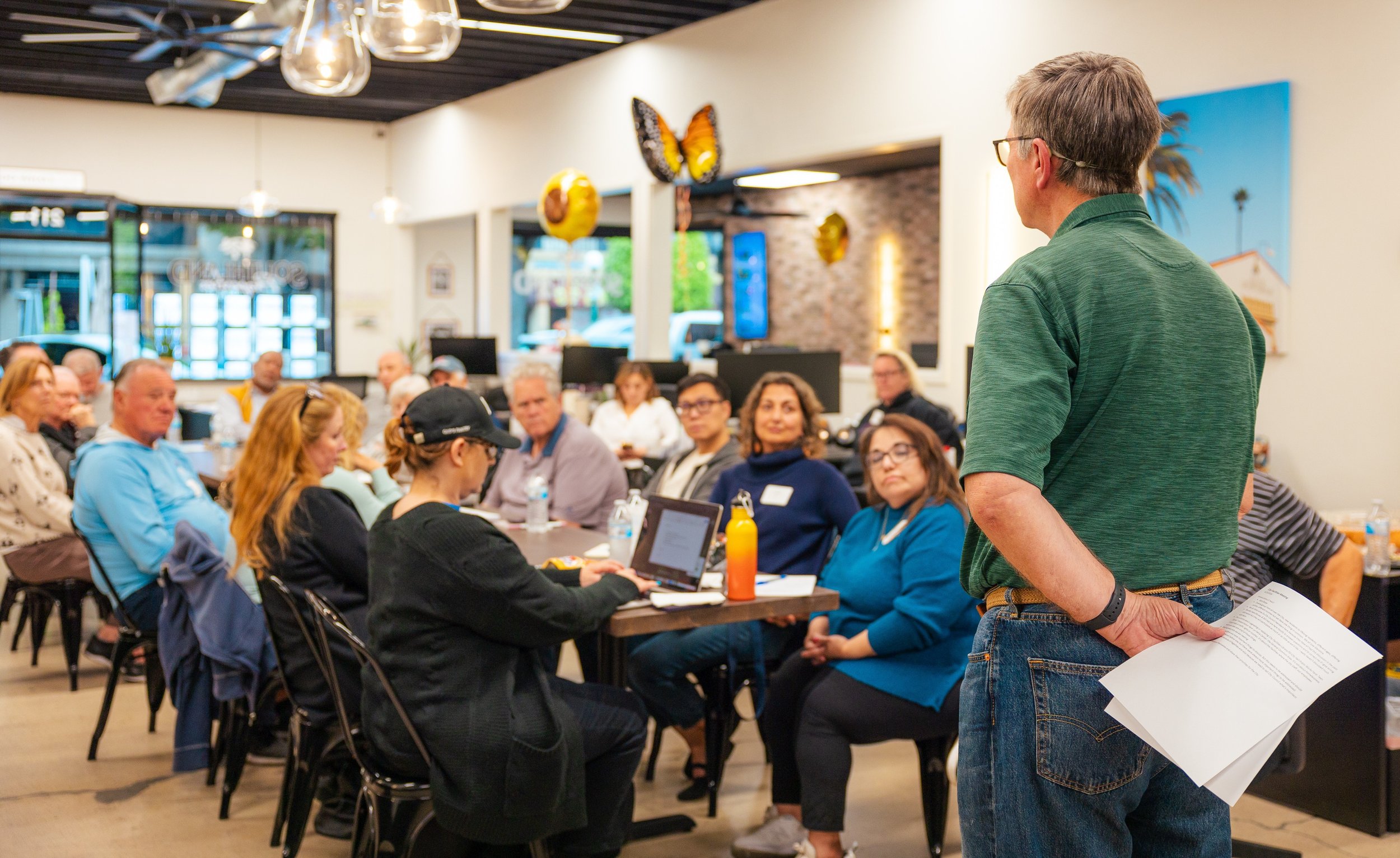

Current FROG Campaign Committee
Campaign Chair
Gary Boyer
Co-Vice Chairs
Tomoko Toland
Steven Mateer
Secretary
Stella Ybarra
Treasurer
Connie Winn
Proponents
Jim Nakano
Joe Cina
Members at Large
Alex Lee
Andrew Jared
Bob Kuhn
Erica Landman
Hannah Cina
Homa Sikon
Jack Evanilla
Marsha Mason
Marty Barrett
Mike Antenesse
Ray Malki
Tim Moore
Background and Persistent Issues
Gary Boyer served on the City Council from 2015 to 2024. During his tenure, one recurring concern was the deteriorating siding on the annex of the La Fetra Center. Initially, this appeared to be a straightforward project—simply a matter of repainting the worn shingle siding. However, priorities were weighed at the Council level, the La Fetra Center’s siding was continually postponed in favor of more urgent matters.
Eventually, when the project received some attention and support, further investigation revealed that the problem was far more complex than anticipated. Substandard materials had been used during the original construction, meaning a paint job would not suffice; the entire siding required replacement. The use of inexpensive materials was itself a result of budget constraints at the time of construction. This led to a situation where the initial decision was to build within the available budget or defer the project altogether. Like many major nonessential Capital Improvement projects, this was deferred in favor of more immediate issues.
Deferred Maintenance and Community Impact
Unfortunately, the decision to delay siding replacement became an annual occurrence, as more pressing issues always seemed to take precedence. Over time, decades passed with repairs repeatedly deferred. The La Fetra Center was not alone in this; leaks at the Library and deteriorating conditions at the Transportation Yard and Public Works Yard were also accepted as the norm. Despite the widespread nature of these problems, residents were rarely consulted about their priorities for city improvements.
Seeking Solutions Through Community Engagement
After nearly a decade on the City Council, Boyer recognized the need for action but, like many others, was unsure of where to begin. Upon retiring, he engaged in conversations with residents and discovered that many shared his concerns but lacked direction. Dialogues with former Council members revealed that these issues had been debated for decades, with little progress made.
Determined to involve the community, Boyer assembled a diverse committee of residents to discuss possible solutions. Twenty individuals were invited to the initial meeting, representing all areas and backgrounds of Glendora—North, South, East, West; Republicans and Democrats; young and old; wealthy and modest; Liberals and Conservatives. The turnout exceeded expectations, with twenty-four people in attendance and others expressing interest.
Formation of the FROG Committee
The committee adopted the acronym FROG, credited to the late Lois Shade, a former Mayor of Glendora, for “Facilities Restructuring of Glendora.” This name helped maintain the lighthearted spirit of Glendora while addressing serious challenges. The group’s first major undertaking was a tour of city facilities to assess conditions firsthand. Members witnessed leaking roofs at the Library and City Hall, electrical and plumbing problems, undersized police quarters, the aging siding at the La Fetra Center, makeshift offices at the Transportation Yard, abandoned buildings at Big Dalton, and even a repurposed 1950s Texaco gas station still in use at the Public Works Yard. These observations highlighted the city staff’s efforts to mask problems but underscored the urgent need for substantial solutions.
Debating Funding Strategies
The committee engaged in spirited debates about potential strategies for funding repairs and improvements. Outsourcing all city services was considered but ultimately rejected, as residents value local control. Annual budgeting for improvements would take decades, even if future Councils allocated 10% of the General Fund each year. Selling South Hills for development or adding high-density apartments along Route 66 was discussed, but these options conflicted with community preferences. Grant opportunities were investigated, but few were available for large-scale capital improvements, and the city’s demographics did not meet most eligibility requirements. Even the idea of selling city facilities to investors and leasing them back was also explored, a model used elsewhere only in extreme financial distress. Ultimately, the least unfavorable option was self-taxation, though it was not popular among committee members.
Moving Forward Together
After seven months, dozens of meetings, and hundreds of conversations, the group reached a consensus: doing nothing would only pass this issue on to our kids and grandkids. The committee emphasized the importance of staying informed and involved, inviting all residents to participate regardless of their stance. These decisions will shape Glendora for generations, making community engagement essential.
Conclusion
The collective effort to address long-standing facility issues in Glendora depends on active participation, open dialogue, and commitment to finding workable solutions that reflect the community’s values and needs. Please contact us or stay tuned for more information. Whether you think this is an important issue or not, we want to make sure everyone is engaged. Glendora belongs to all of us.
Doing nothing is not an option.